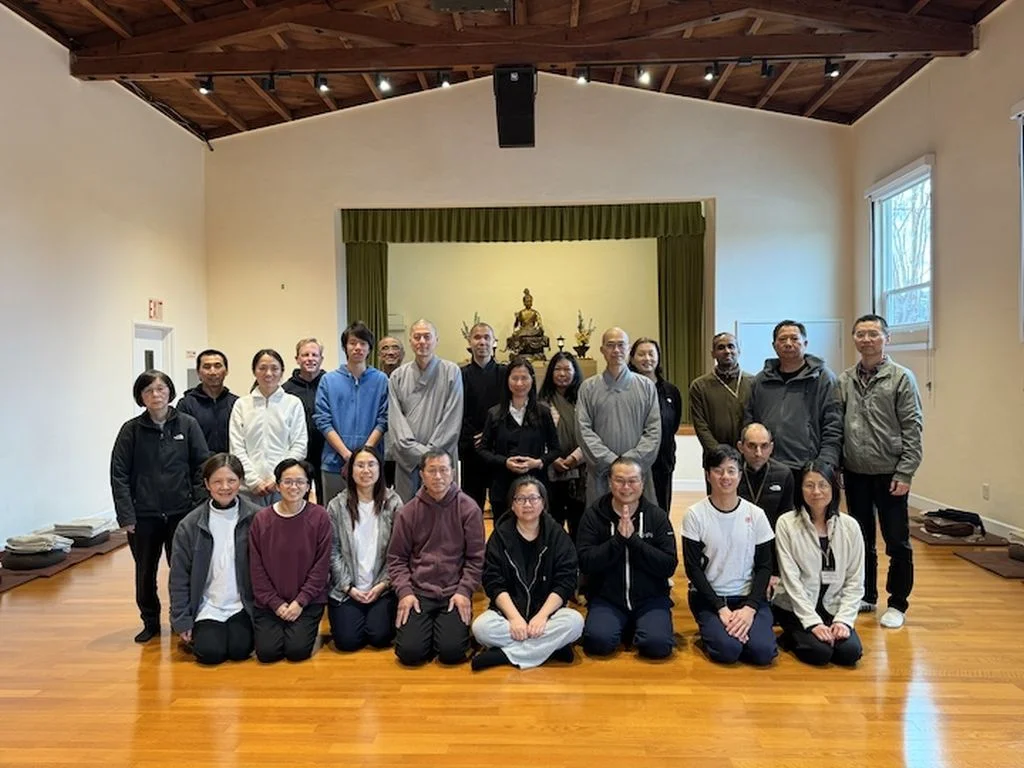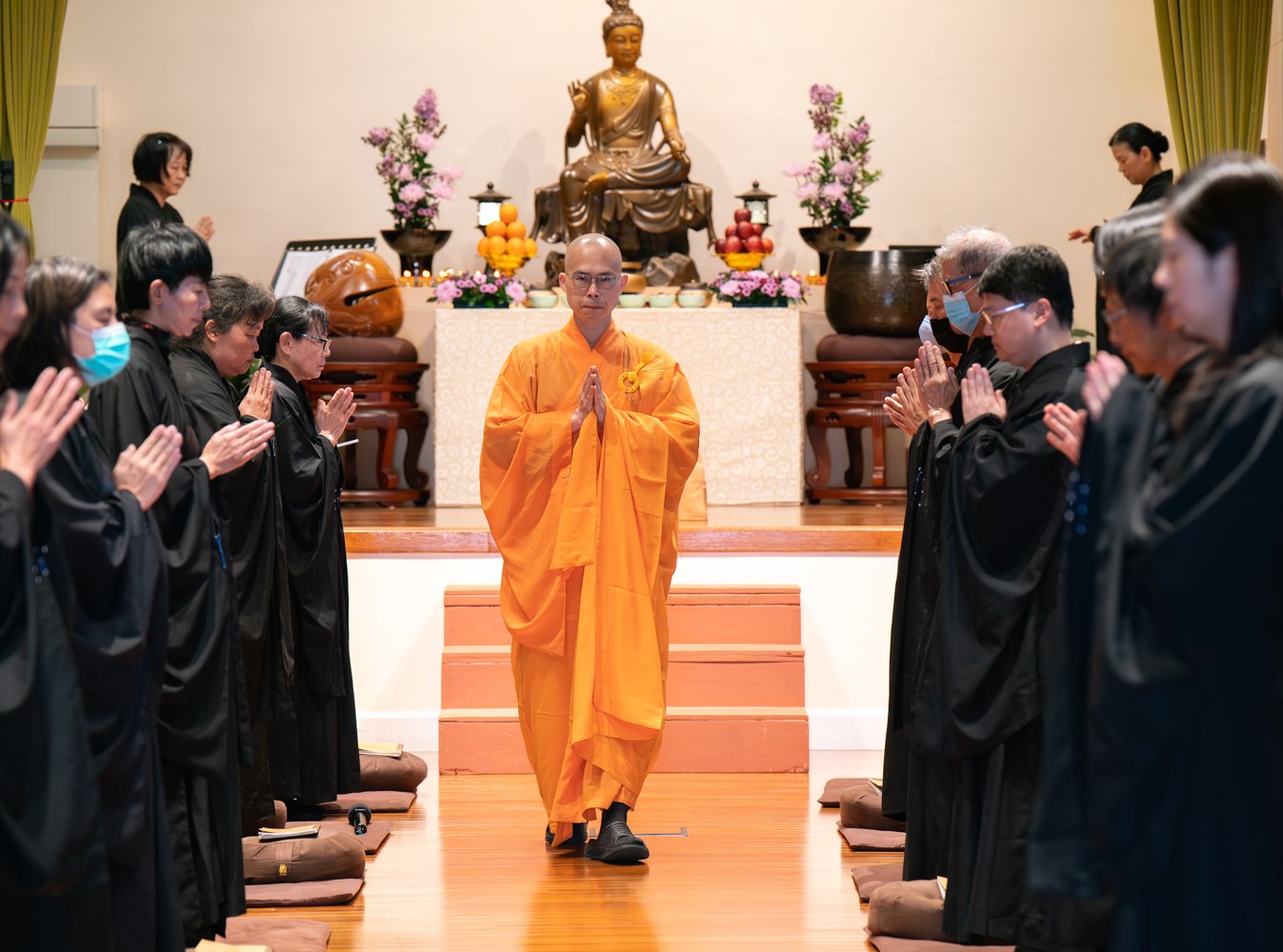
Dharma Drum Mountain San Francisco Bay Area Center held the “the Qingming Two-day Buddha Name Recitation Retreat for Expressing Gratitude and Eight Precepts Observance” on March 28 and 29. More than 100 participants, including devotees and volunteers, took part in the event, among them 70 formally observed the Eight Precepts. Through continuous recitation of the Buddha’s name, participants commemorated their ancestors and dedicated the merits to deceased loved ones, friends, and all sentient beings. By observing the Eight Precepts for a full day and night, participants opened a path toward liberation from birth and death and planted wholesome seeds for enlightenment.
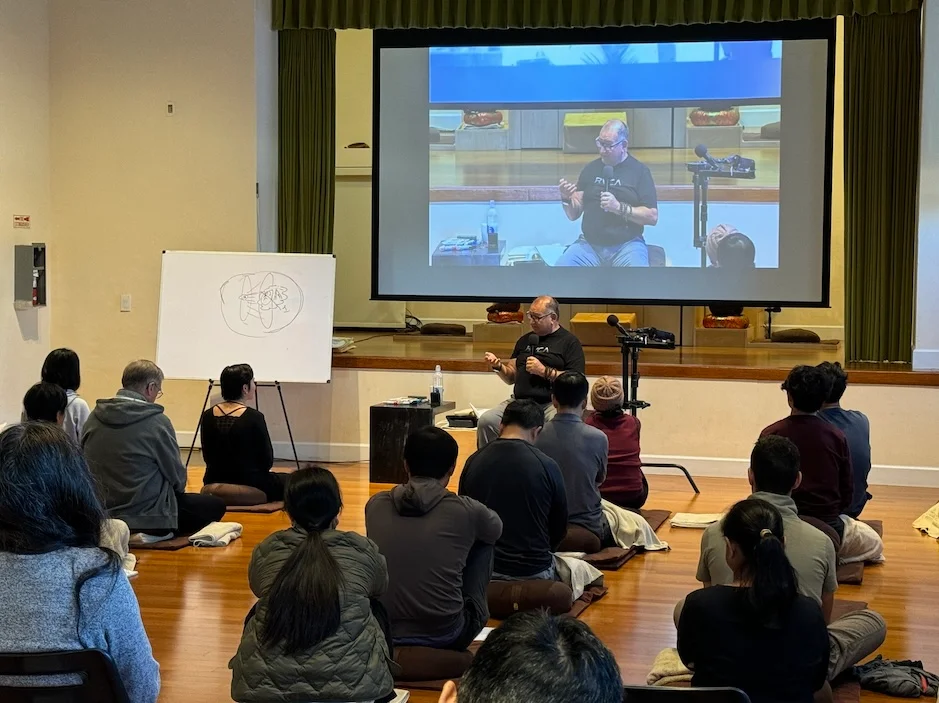
During the first day’s formal transmission of the Eight Precepts, a recorded teaching by Dharma Drum Mountain founder, Master Sheng Yen, was played. In the video, the Master clearly explained the content and meaning of the Eight Precepts. These include: not killing, not stealing, refraining from sexual activity, not lying, and not consuming alcohol. The sixth precept is to refrain from wearing perfumes or adornments, applying cosmetics, singing, dancing, or attending such entertainments; the seventh is not to sit or lie on high or luxurious beds; and the eighth is not to eat at improper times (i.e., no food after noon).
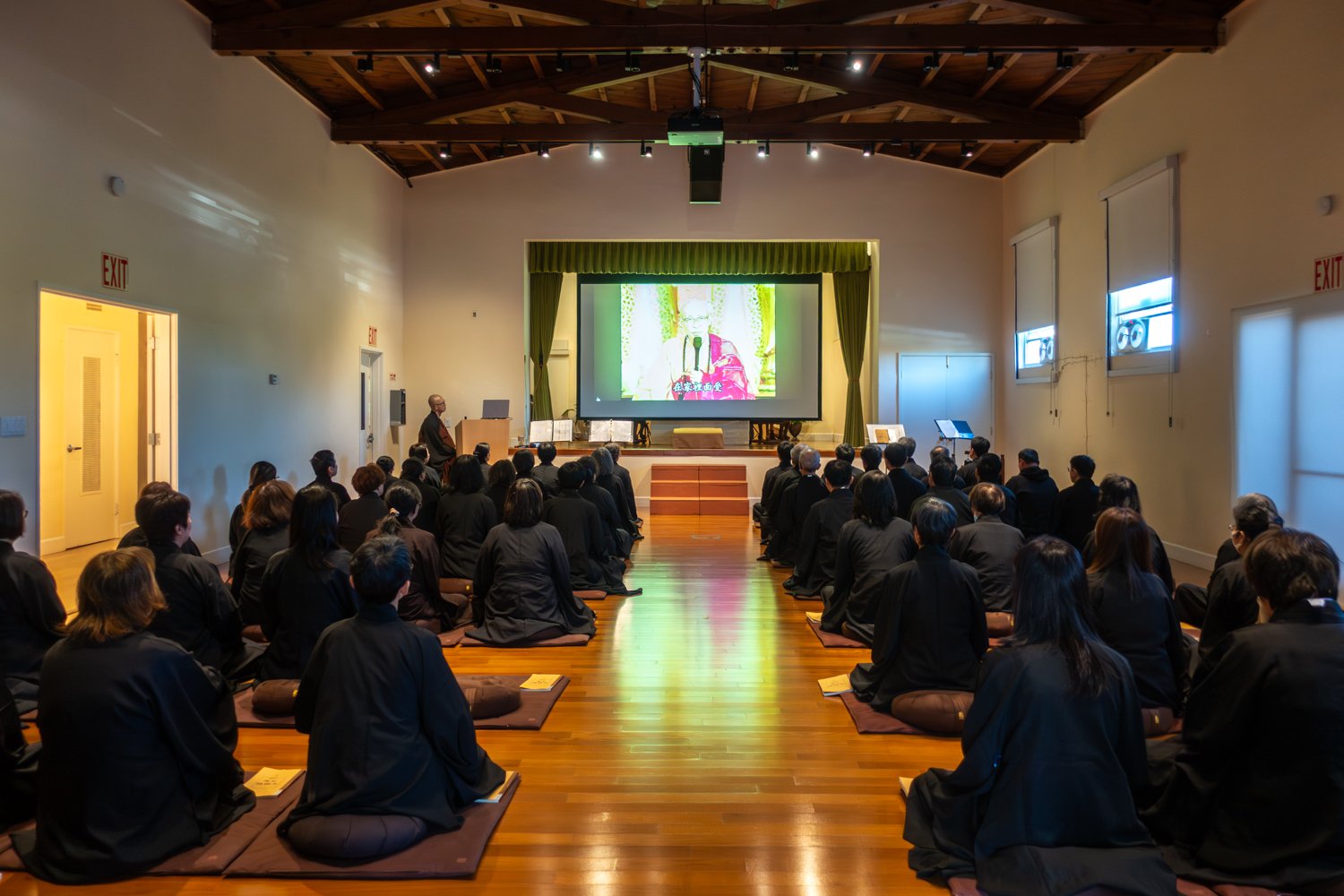
Compared with the Five Precepts, the third precept of the Eight Precepts changes from “no sexual misconduct” to “refrain from sexual activity,” while the other precepts remain the same. Compared with the Ten Novice Precepts, only the rule against handling gold, silver, or valuables is omitted. The sixth and seventh precepts help practitioners distance themselves from sensory desires and simplify material life, thereby allowing full dedication to spiritual practice. Observing the eighth precept—not to eat at improper times—is known as “holding the fast.”
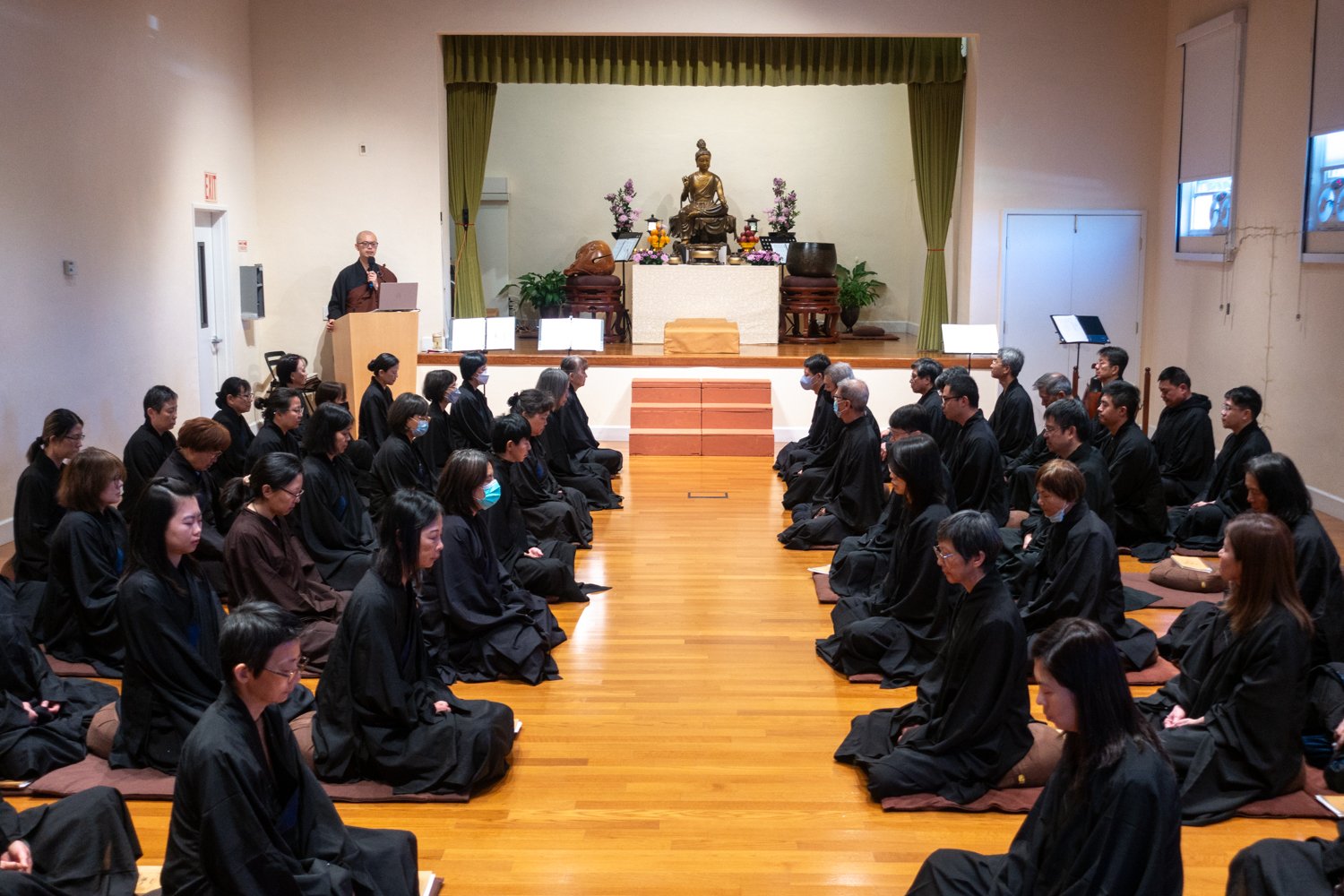
The merit of observing the Eight Precepts is especially profound because it cuts off two fundamental causes of cyclic existence: “food” and “sexual desire.” Although it does not lead as directly to arhatship as lifelong observance of the Ten Novice Precepts, it allows practitioners to experience monastic life for a full day and night and to plant the right causes for liberation. Each day included seven sessions of practice. During these times, participants engaged in repentance rituals, circumambulation, seated recitation, silent meditation, and merit dedication—repenting past misdeeds, purifying one’s own body, speech, and mind, remembering and reciting the Buddha’s name, and dedicating the resulting merits to all beings.
On the afternoon of the second day, Venerable Yan Qi (演期法師), resident monk of Dharma Drum Mountain San Francisco Bay Area Center, delivered a Buddhist teaching. He explained how Master Sheng Yen taught that the Buddha’s name recitation should be grounded in faith, sincerity, deep resolve, and vows. Venerable Yan Qi further elaborated that recitation strengthens one’s faith in practice: the phrase “Amituofo (Buddha Amitabha)” arises from the heart, is spoken by the mouth, and is heard by the ears. “Sincerity” means engaging the whole body and mind in recitation. Wandering thoughts are natural, and the Buddha’s name serves like a flotation board in swimming—without it, one would sink into the ocean of suffering. “Deep resolve” means turning the Buddha’s name recitation into a habit. Through practice, we can try to integrate the Buddha’s name recitation into all daily activities—walking, standing, sitting, and lying down—gradually allowing it to replace wandering thoughts. When mindfulness continues uninterrupted, one can experience clarity and purity of mind. Practice is not only for oneself: one must also generate vows, wishing not only for one’s own liberation from suffering but also for all beings to be freed. With such a mindset, one’s mind aligns with the Buddha’s, and the power of recitation grows stronger.
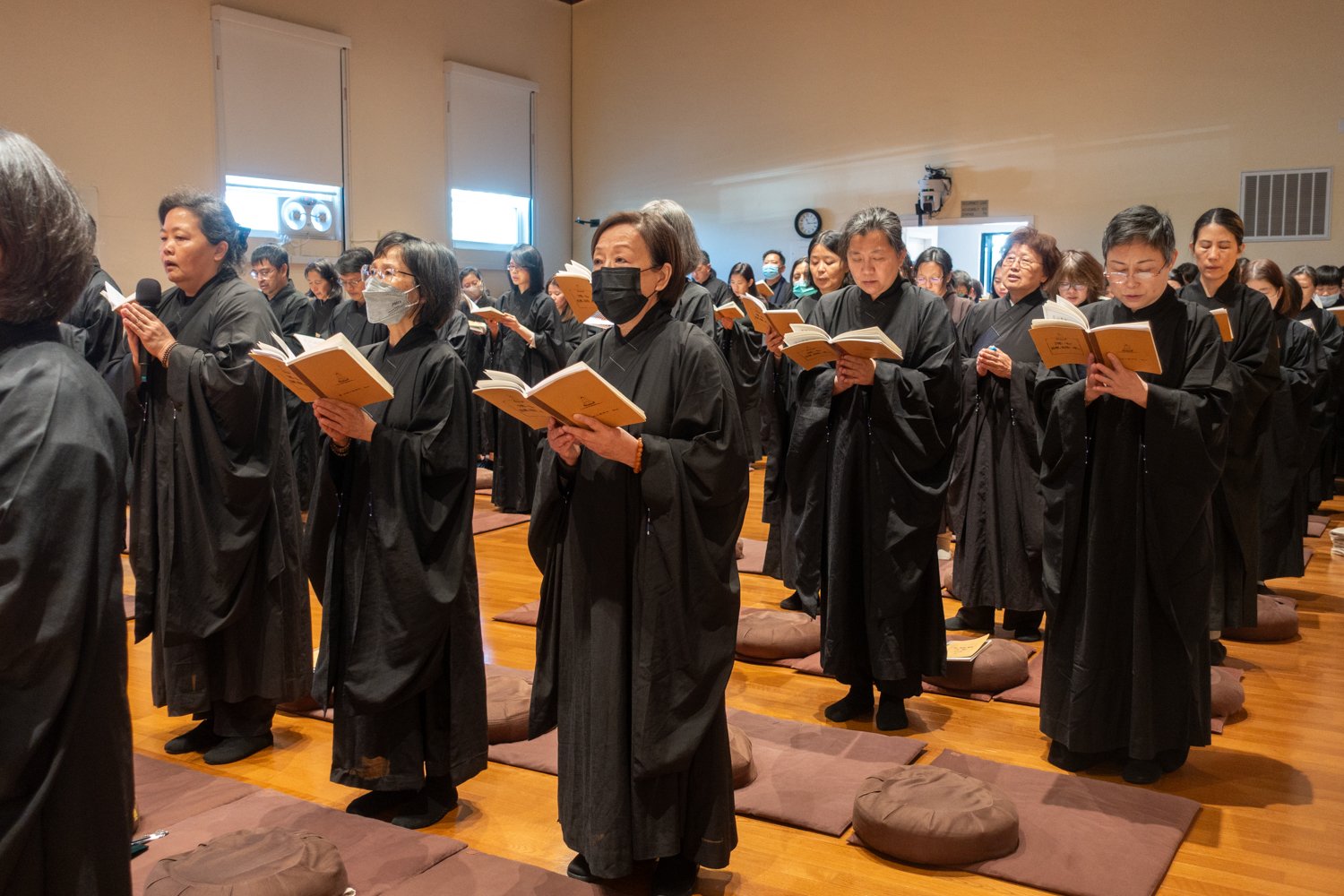
During the final sharing session, one participant expressed Dharma joy in attending the entire event with her 20-year-old daughter. Another participant shared that when illness arises, invoking the Buddha’s name brings a sense of calm and stability. In addition to expressing gratitude for the event and the support of over 40 volunteers, participants also gained a deeper understanding and experience of the Buddha’s recitation and the observance of the Eight Precepts.
Original text in Chinese: Jin Kuanhua (靳寬華)
Photos: Jean Li
Translation: Patricia Yang
Editing: Keith Brown