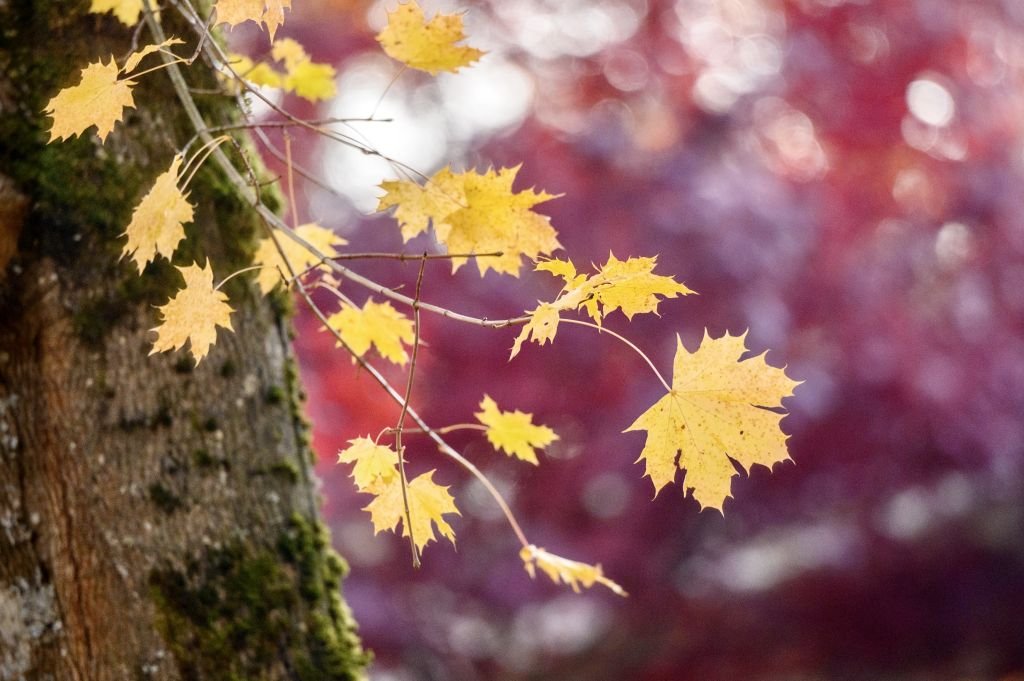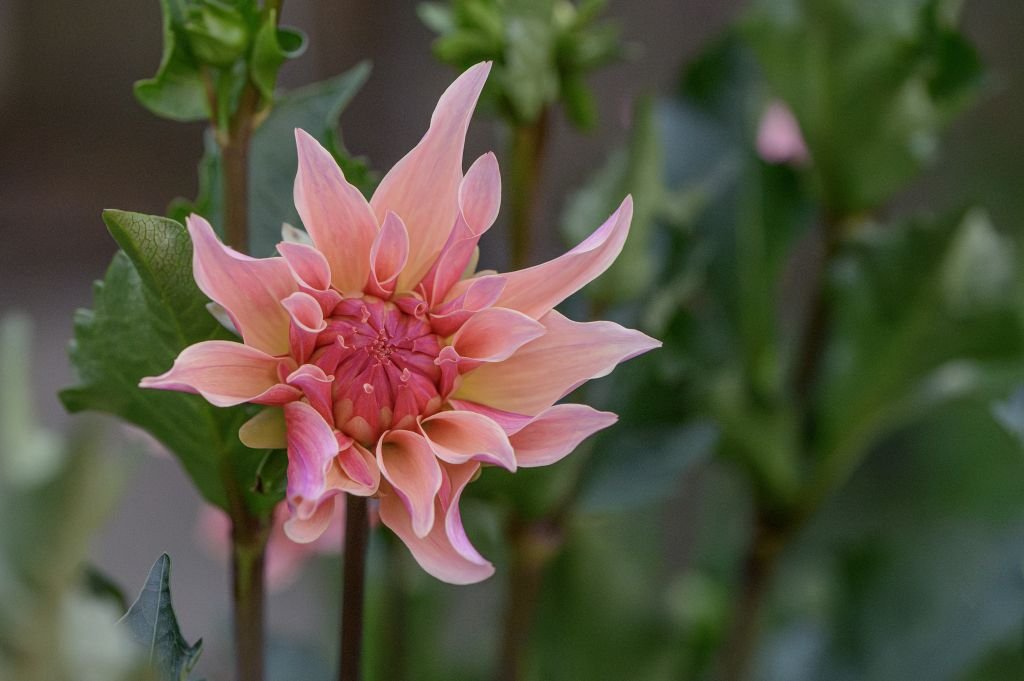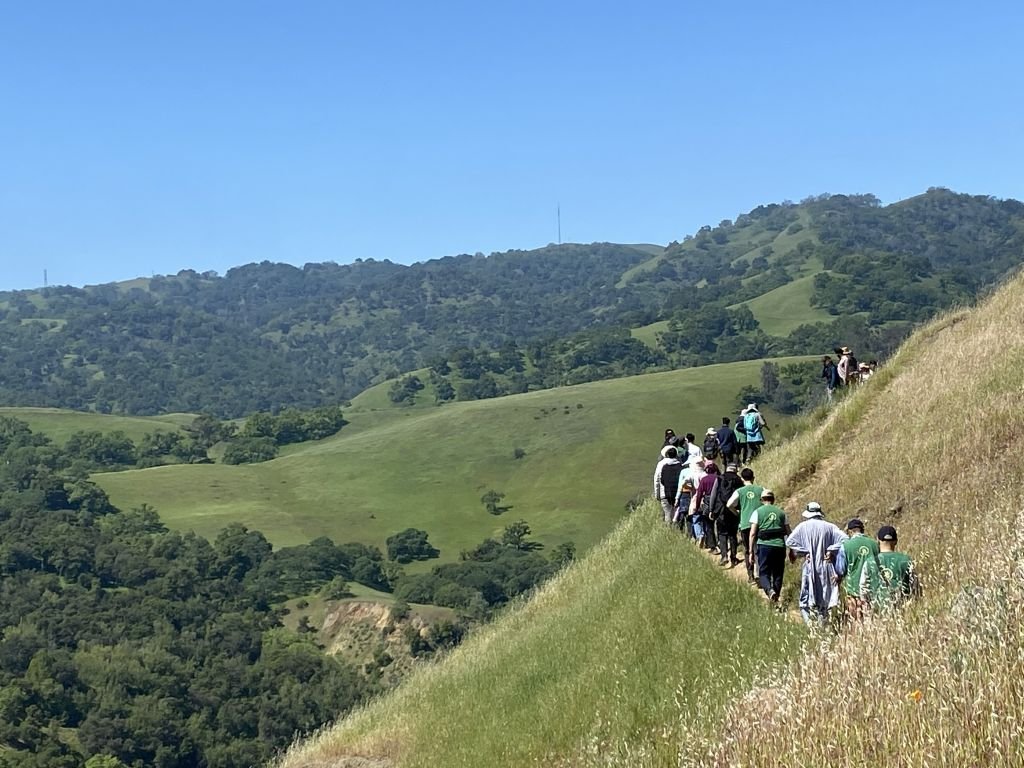

During “outdoor walking meditation”, we may practice the three “don’ts”: Don’t describe, don’t label, and don’t compare.These three together are known as direct observation. “Direct observation” means that seeing is just seeing, and hearing is just hearing.
If we don’t apply the principle of “direct observation,” then when we see something, we often very quickly spin off into a chain of associations. For example, I see a flower, and immediately I associate it with the idea “this is a flower,” linking it with the image in my memory and labeling it as a flower. Then I think, “This flower is yellow.” Next, “This yellow flower is very beautiful.” At this point, an object has been labeled and described. Finally, I think, “The flower on the right is more beautiful than the one on the left,” and now it has been compared with another object. So when there is labeling, describing, and comparing, that is no longer “direct observation.”
This is a very common pattern in how we interact with the external world and our environment. In everyday life, especially when work requires us to interact with others, this mode of functioning is actually acceptable, or even necessary. When we talk to others, our mind naturally engages in thinking, recollection, and so forth. However, when we are in situations where we don’t need that much interaction with the outside world, we can practice minimizing these mental associations.
The purpose is to relax both the body and the mind, which is beneficial for our meditation practice and our sleep. However, this depends on the situation. When a situation requires us to remain alert, when our eyes must observe in all directions and our ears must listen carefully, we need to maintain clear awareness.
For example, when driving and approaching a traffic light, we must know which light is red and which is green. We cannot simply “see as merely seeing,” disregard its meaning, or ignore what action is required, and then step on the gas. Doing so could easily lead to an accident.
Another example is chopping vegetables. At that moment, you must clearly distinguish between the vegetables and your fingers, and be sure you are cutting in the right place. Otherwise, what was intended to be a vegetarian meal might unexpectedly become a meat dish!
Therefore, we need to distinguish among different situations and adjust the way we interact with the external world accordingly. We still have to be able to perceive people’s height, build and appearances, and we still need to discern right from wrong. There is no need to intentionally pretend that we have already entered a state of “direct observation,” saying, “I don’t know any of this; I make no distinctions at all!” That would also be incorrect.
After all, we still need to interact with the external world in appropriate ways within our daily lives. Therefore, we adjust for ourselves how much association or mental linking is actually necessary. When we don’t need that much mental association, we can practice gently gathering the mind inward, relaxing the body, and allowing ourselves to enter a virtuous cycle (or cycle of goodness).