— Anne Yeow
I have been connected with Dharma Drum Mountain for twenty-six years. Like many others, my first encounter with Master Sheng Yen was through his books.
After completing an introductory meditation class, my first seven-day retreat was with Master Chi Chern. I traveled eight to nine hours by bus from Singapore to northern Malaysia to attend what Master Chi Chern called a “Silent Retreat.” After the retreat, I deeply experienced the power of practicing with others. Every Sunday morning, I began attending group meditation sessions at the local Dharma Drum Mountain center.
After attending regularly, I noticed the same person always mopping floors and setting up the space, so I started arriving early with friends to help. Gradually, I began volunteering at the Singapore chapter. Later, through the introduction of a senior practitioner, I also started assisting Venerable Guo Jun with administrative and teaching matters.
At that time, Master Sheng Yen was getting on in years. The best opportunity to attend a retreat with him was to come to the Dharma Drum Retreat Center (DDRC) in New York.
In late May 2004, I was fortunate to travel with a few friends to attend a ten-day retreat. It was my first time meeting Master Sheng Yen up close in person.
We arrived during Buddha’s Birthday, and the Chan Meditation Center in Queens was packed. We could only stand at the back, catching glimpses of Master Sheng Yen and Elder Master Ren Jun from afar. Later, perhaps because of our connection to Venerable Guo Jun, Master Sheng Yen noticed us—a few young people who had flown nearly twenty hours from Singapore. When the crowd thinned, he looked at us and asked, “Why are you wearing such thin jackets? It gets cold up at the retreat center. You should bring more layers.” We explained that we assumed it wouldn’t be too cold since it was summer, so we hadn’t packed much. Master Sheng Yen listened, said nothing, and went back to his duties.
When we arrived at DDRC in upstate New York, the temperature swing was indeed dramatic. On the second evening of the retreat, after the Dharma talk, Master Sheng Yen announced, “It’s very cold at night. If you don’t have enough warm clothing, the monastics have gathered some jackets. Please help yourselves if you need one.”
I was deeply moved. Coming from Singapore, where it’s summer year-round, we had no idea the temperature could drop so sharply at night. We seemed to be the only ones caught unprepared. I realized then that Master Sheng Yen had noticed our brief exchange and quietly taken care of us—even though he hadn’t responded immediately at the time.
This small gesture left a lasting impression on me and became a guiding principle in my years of volunteering: whether in the meditation hall or any other role, always anticipate the needs of participants. Observe carefully. Before anyone asks, be ready. Think ahead about what they might need next.
During those days in New York, Master Sheng Yen also asked what we were helping with in Singapore. I told him about Venerable Guo Jun’s activities and the local chapter’s programs. He listened quietly, then said simply, “Support the monastics well.”
It took me over a decade to truly understand those words. At the time, I thought he meant helping Venerable Guo Jun specifically. For years, I felt I had fallen short due to various life circumstances. Only much later did I realize that Master Sheng Yen’s words were not limited to one person or one center. What truly matters is propagating Chinese Chan Buddhism and supporting all the monastics and teachers who carry this lineage forward. This has become a shared commitment for my husband and me: as long as it serves Chinese Chan and Master Sheng Yen’s lineage, we will do what we can.
Over the past two decades, there were stretches when I drifted away from Dharma Drum Mountain. I explored various secular mindfulness programs, including MBSR. They were valuable, yet something always felt missing.
One day, I came across Master Sheng Yen’s book *A Beautiful Life in Old Age* (《美好的晚年》) in a bookstore and was deeply moved. Even during his busiest years and through serious illness, he described his life as “beautiful.” He truly dedicated everything—his entire being—to the Dharma.
I also recalled his words during that ten-day retreat about reviving Chinese Chan Buddhism and the challenges of establishing DDRC.
Master Sheng Yen’s greatest contribution was making the Dharma accessible to modern life. He skillfully adapted traditional Chinese Chan for contemporary practitioners, bringing ancient wisdom into everyday experience. Without him, authentic Chinese Chan practice might never have taken root in the West—or even reached Southeast Asia in any meaningful, practice-oriented form.
He was remarkably flexible and skillful in his teaching. Take, for example, his Fivefold Spiritual Renaissance Campaign, which applies Chan principles to daily life. When sitting in meditation with leg pain or a restless mind, we can use the Four Steps for Dealing with Problems: face it, accept it, deal with it, let it go. The same approach works for life’s challenges off the cushion.
Master Sheng Yen built a bridge between ancient wisdom and modern needs. He drew on the legacy of great masters—Venerable Xu Yun, Master Tai Xu, Master Yin Shun—and synthesized their teachings for today’s world. Without him, there would be no living tradition of Chinese Chan in the West.
Yet this tradition still hangs by a thread. It needs all of us to help it flourish. Without active support, Chinese Chan risks being misunderstood or forgotten. Our practice centers are precious and hard-won. They can only continue if people show up to practice. Each of us plays a part in keeping this tradition alive.
Although Master Sheng Yen is no longer physically with us, he remains close. His teachings endure, waiting to be lived. When we apply his methods in daily life, we connect with him through the Dharma itself. Each monastic and practitioner, in their own way, stays close to Master Sheng Yen through practice.
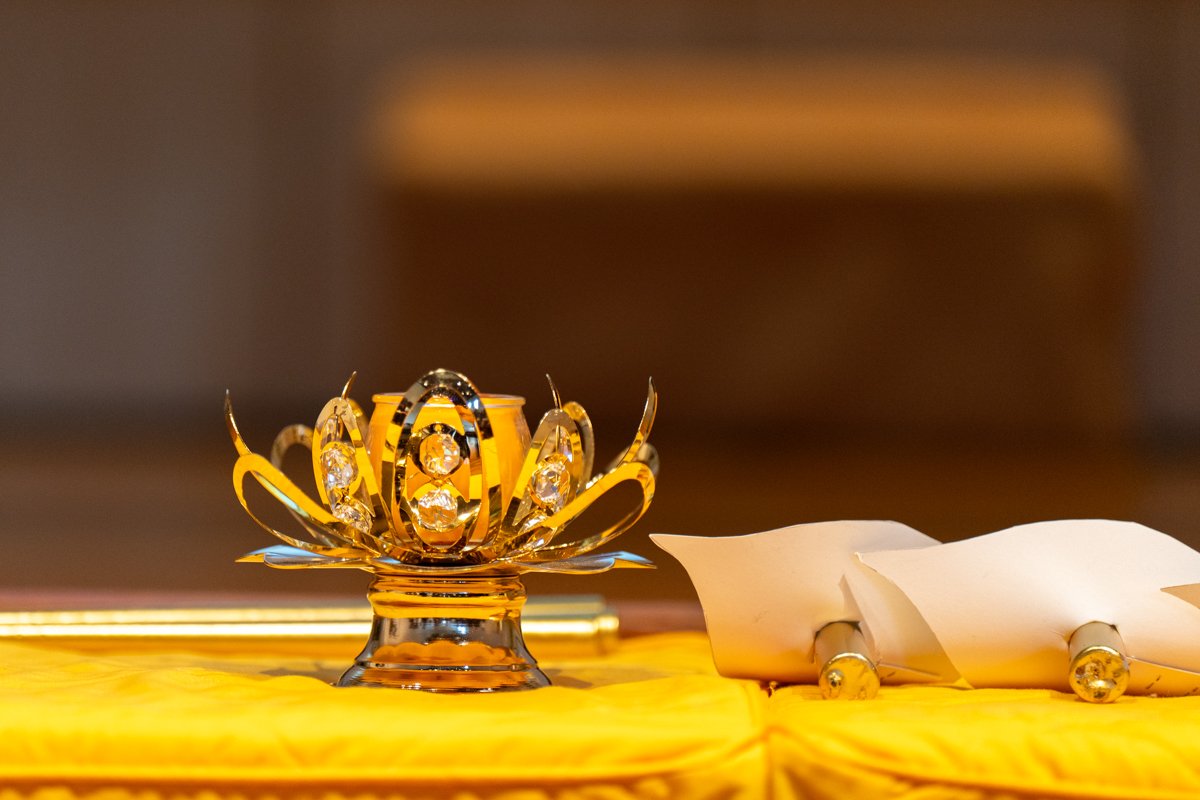
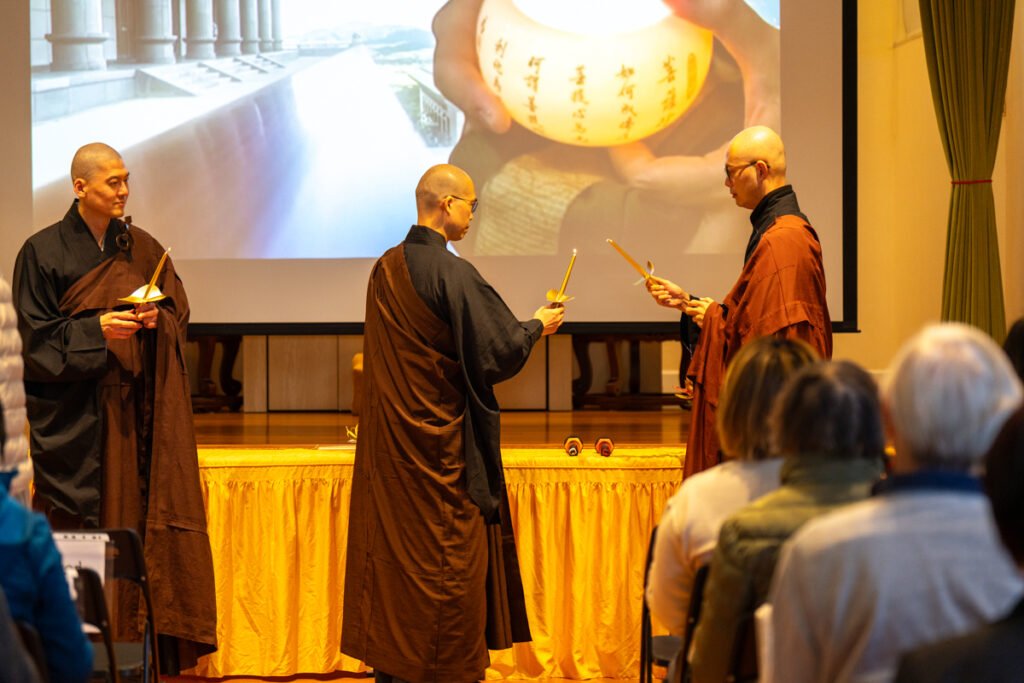
On this Passing the Lamp Day, we honor and give gratitude to Master Sheng Yen. We also are grateful to the Buddha and the generations of teachers who transmitted the Dharma across centuries. And we thank the monastics and fellow practitioners who quietly carry the lamp forward.
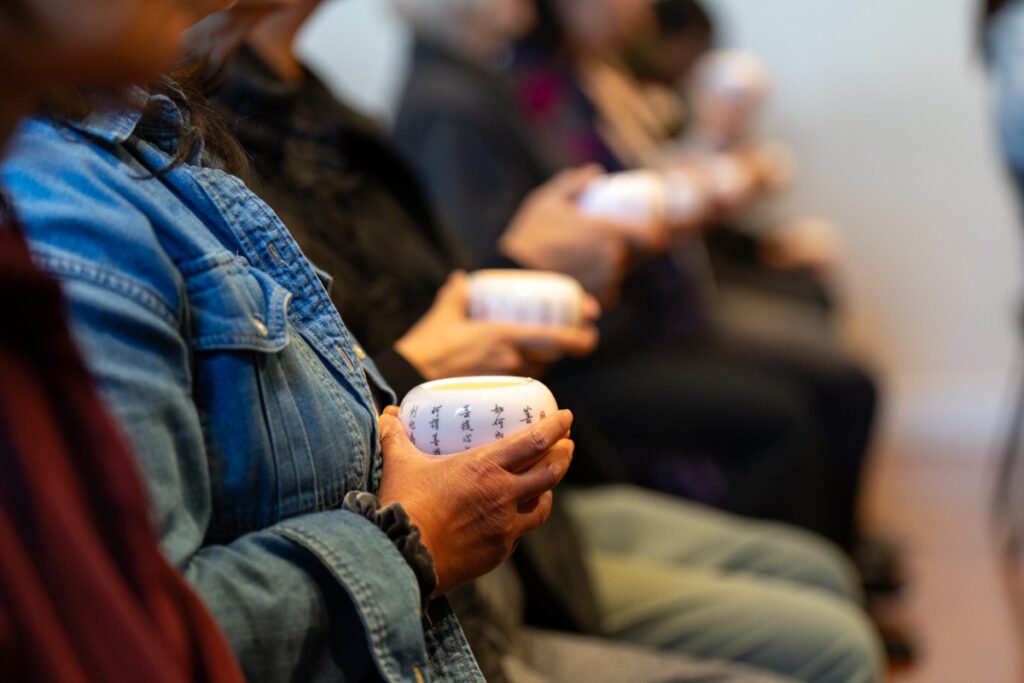
May the warmth of this wisdom lamp illuminate ourselves, shine upon others, and continue the Buddha’s wisdom for generations to come.
Photo By: Jean Li